History of Carrières des Lumières
Until 1880, quarrymen extracted blocks of white limestone weighing two cubic meters here to build the Château des Baux. This intense activity left imposing natural pillars and deep galleries under the mountain. The definitive closure in 1935 marked the end of an industrial era due to competition from modern materials. These industrial remnants now form the majestic setting for projections.
The venue was reborn culturally thanks to Jean Cocteau who filmed 'Le Testament d'Orphée' there in 1959, seduced by its mystical beauty. A few years later, Albert Plécy created the 'Cathédrale d'Images' festival in 1977, projecting works onto these gigantic walls. This innovation foreshadowed the site's current digital era. Cinema and art thus transformed this abandoned quarry into a major cultural space.
Since 2012, Culturespaces has taken over management and launched the first modern immersive exhibition featuring Gauguin and Van Gogh. This inaugural event attracted 250 000 visitors, confirming the site's major tourism potential. Old names disappeared in favor of the current name, while preserving the pioneering spirit of the founders. Popular success quickly validated this new cultural direction.
What to see during the visit
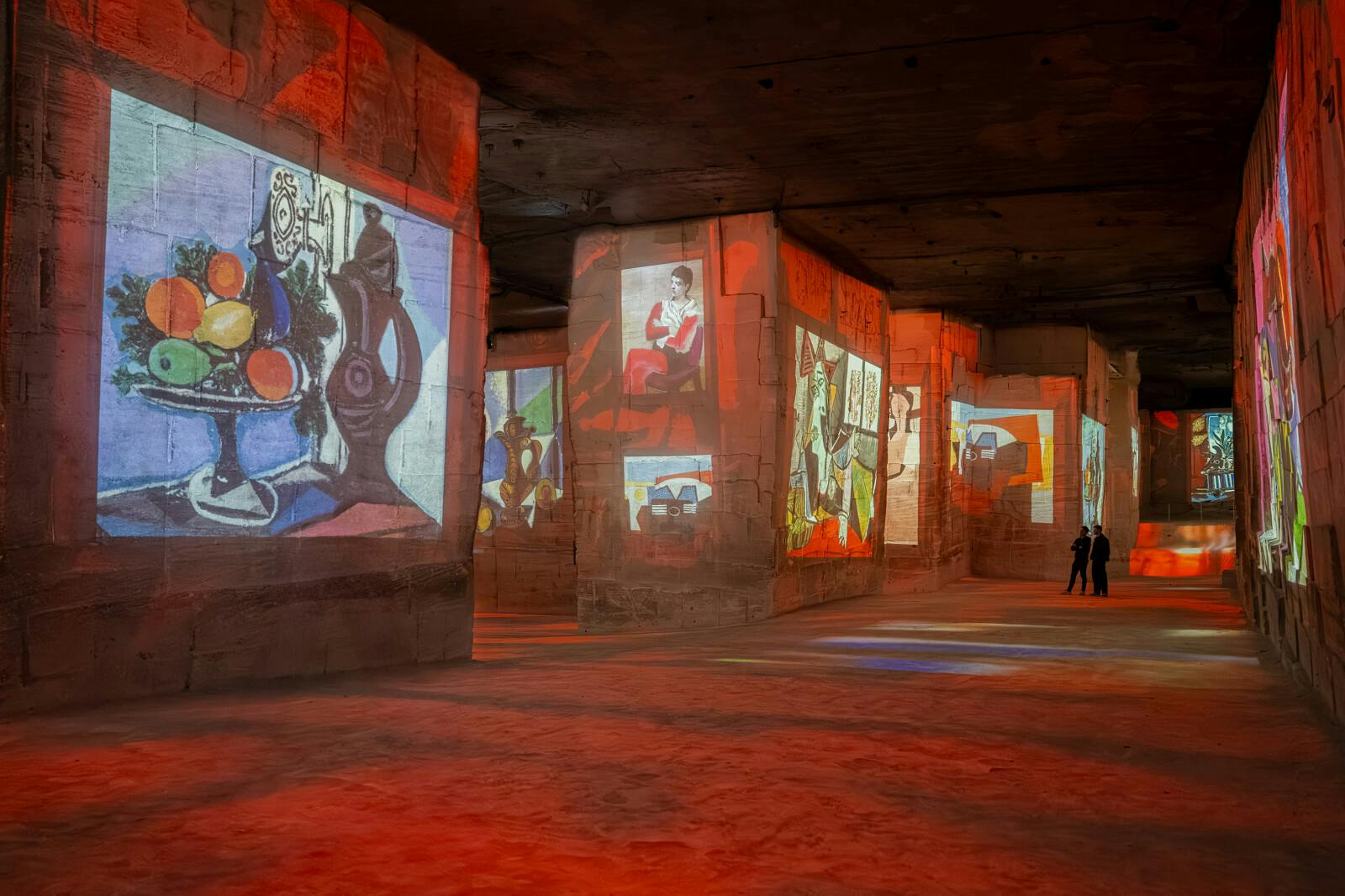
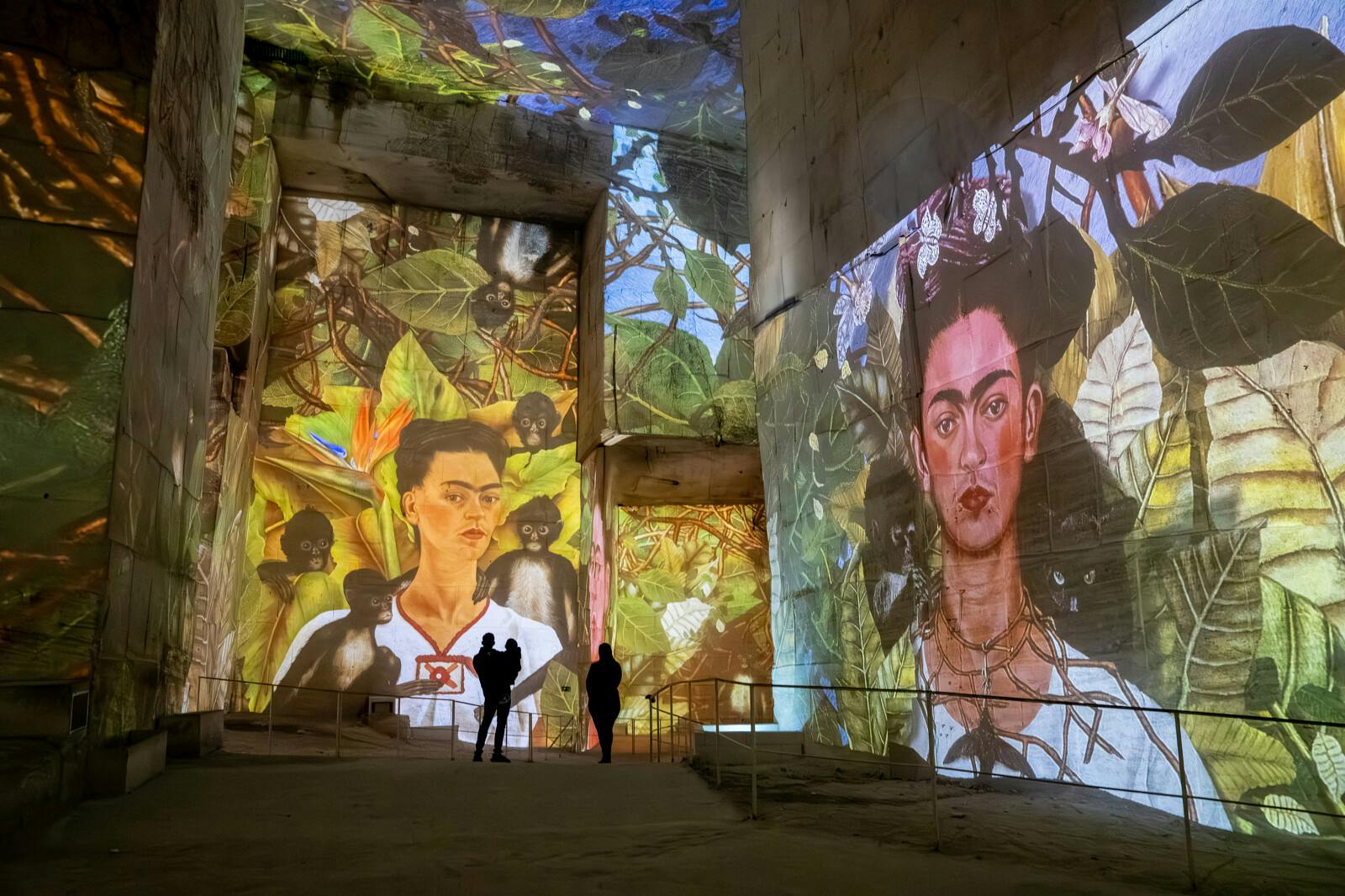
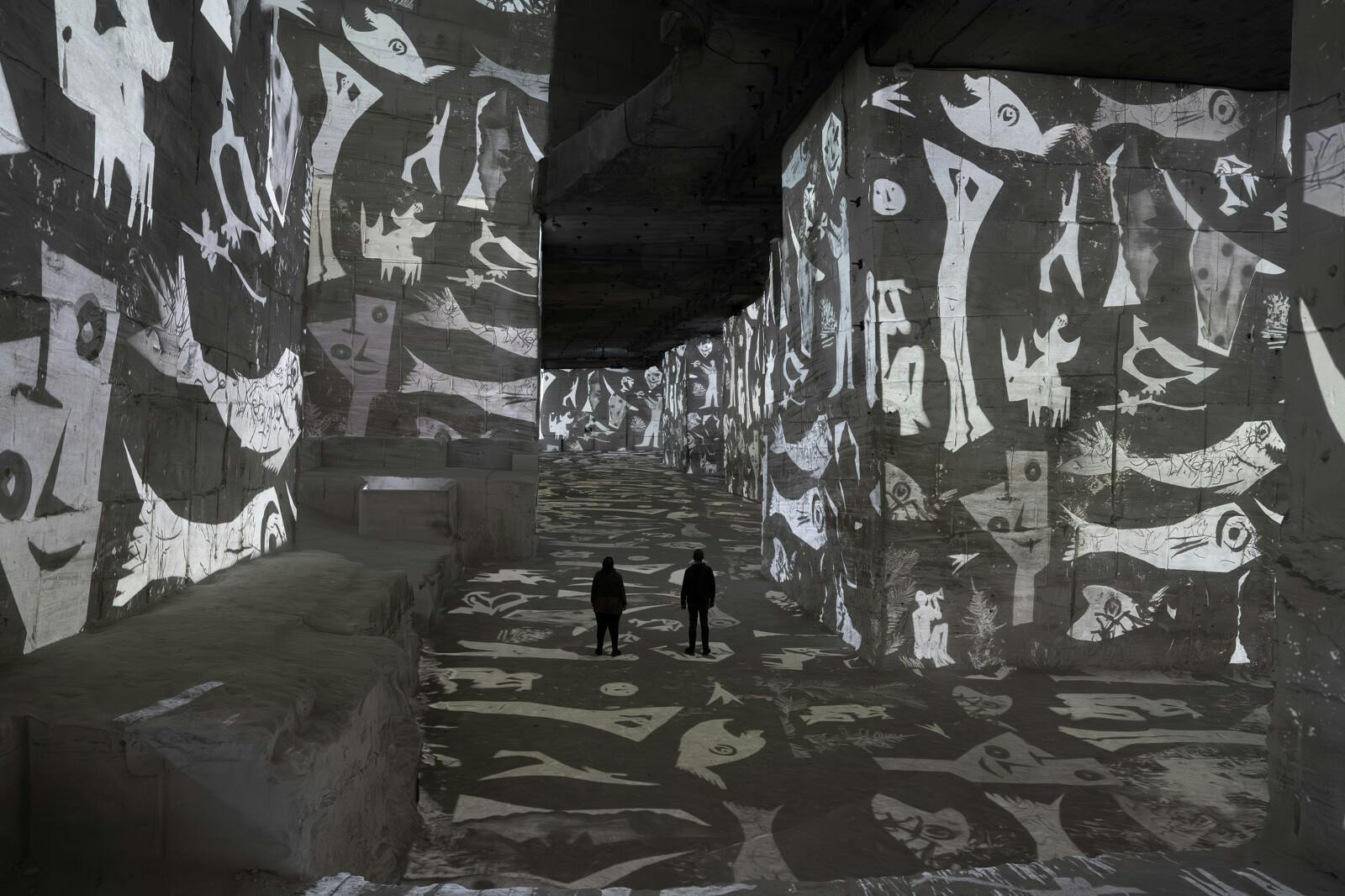
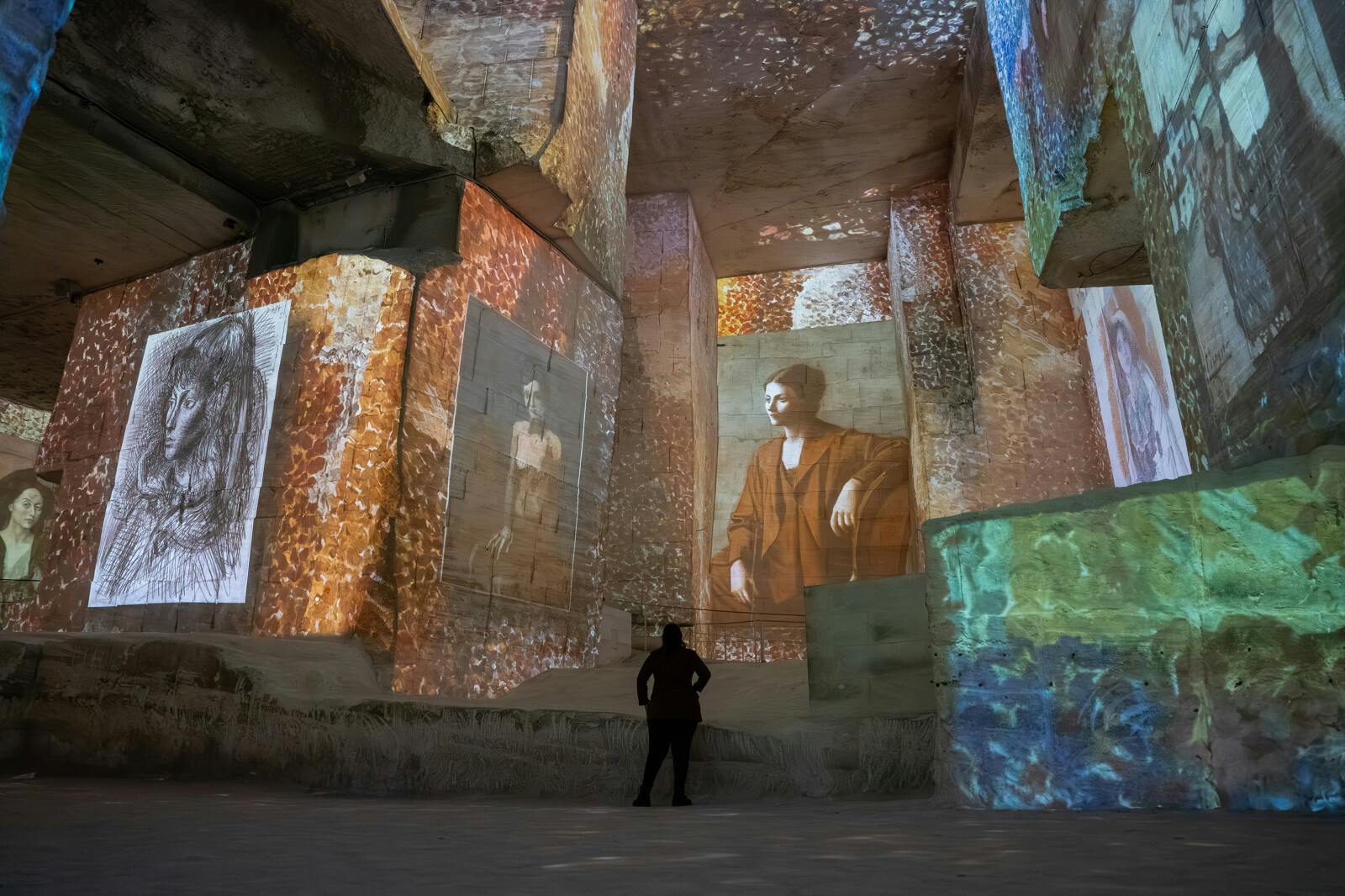
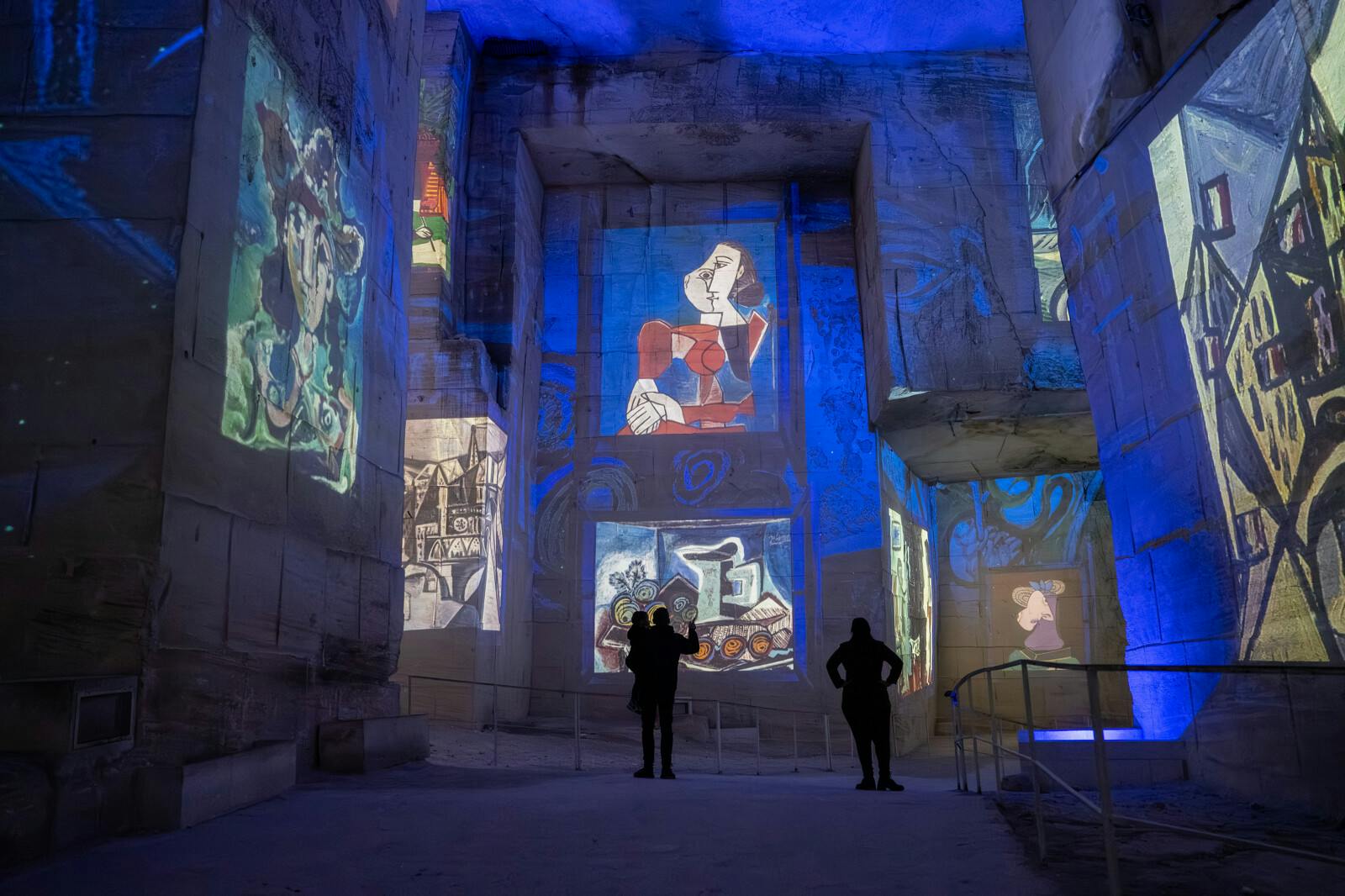
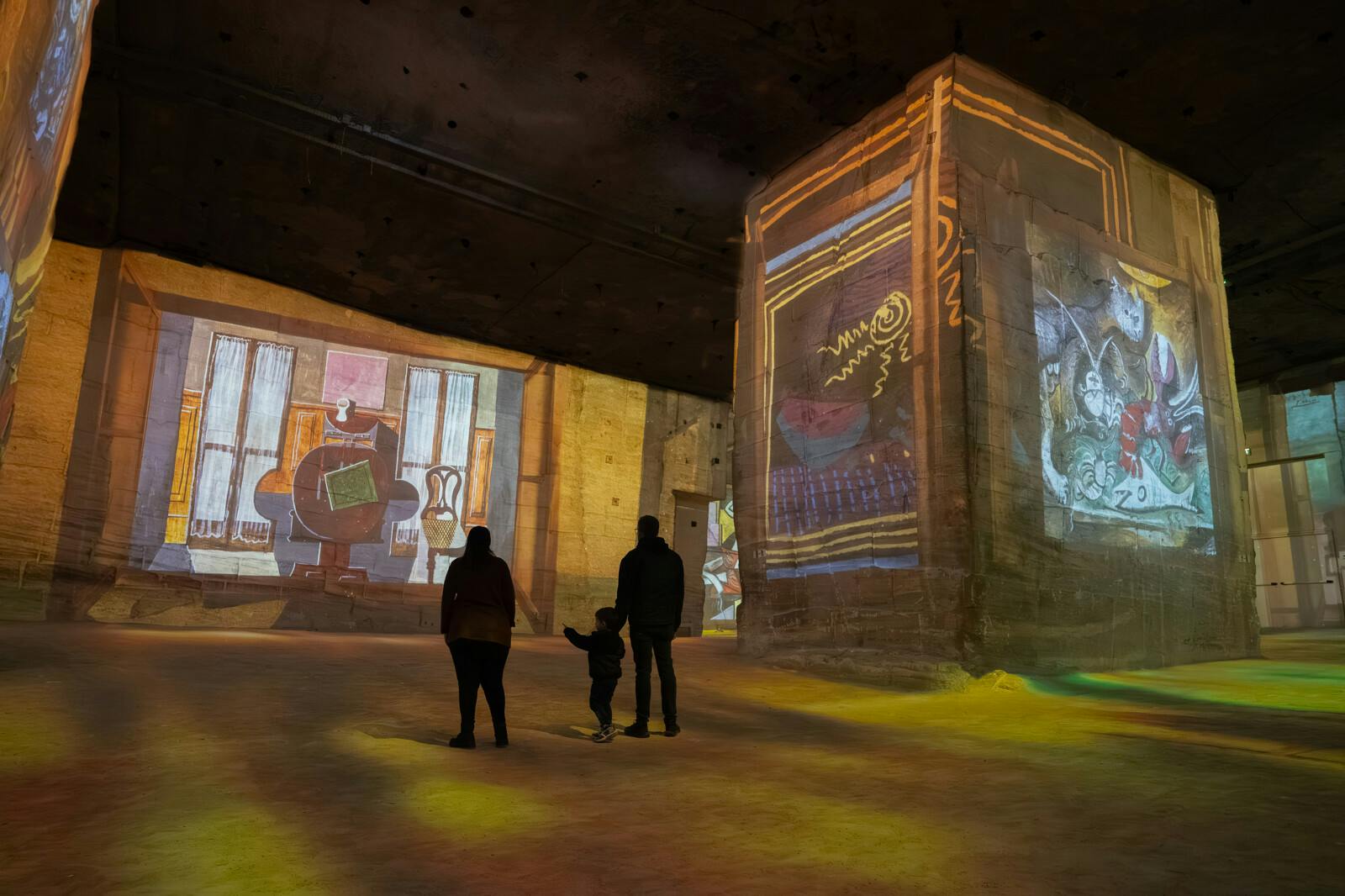
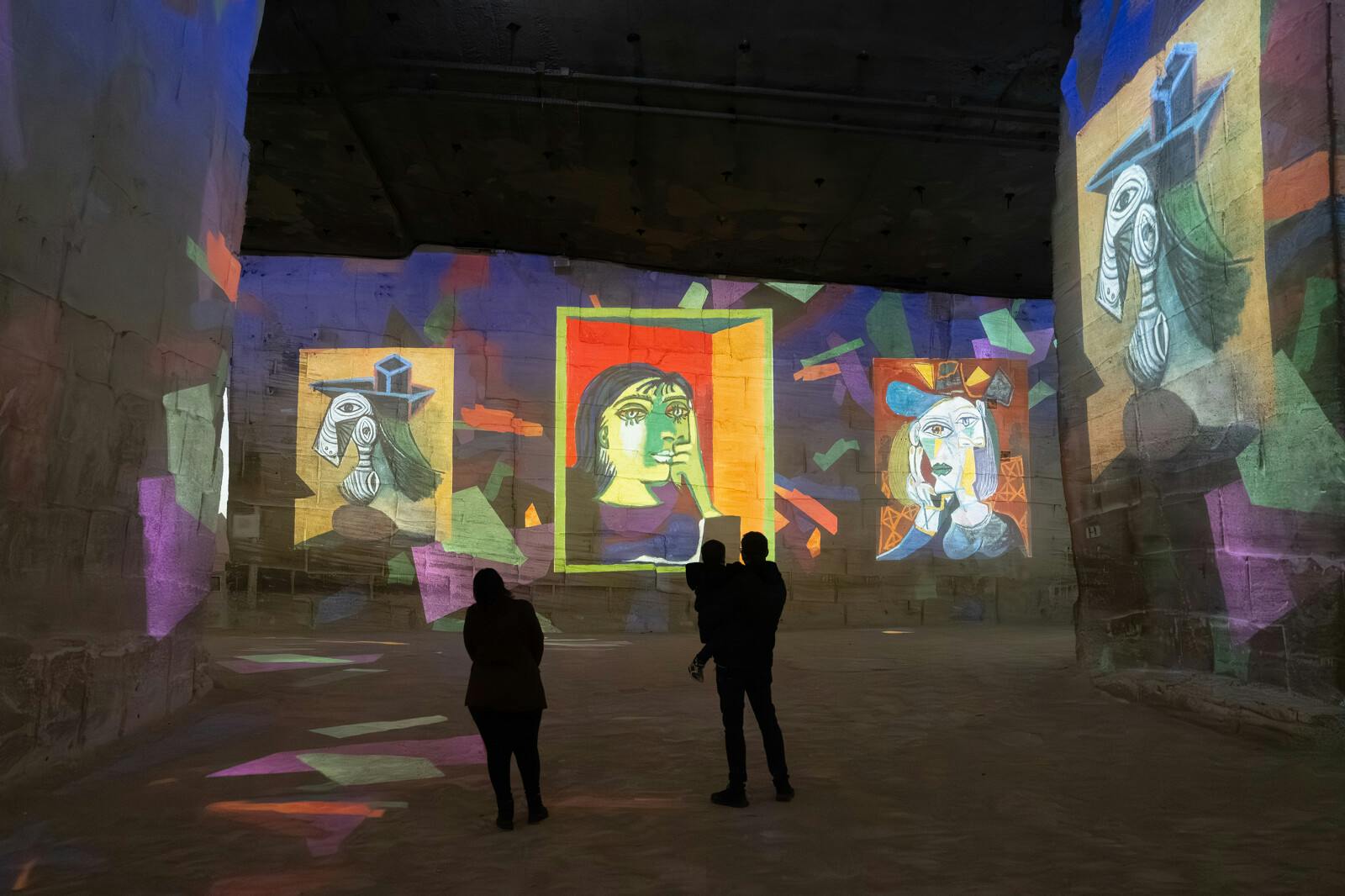
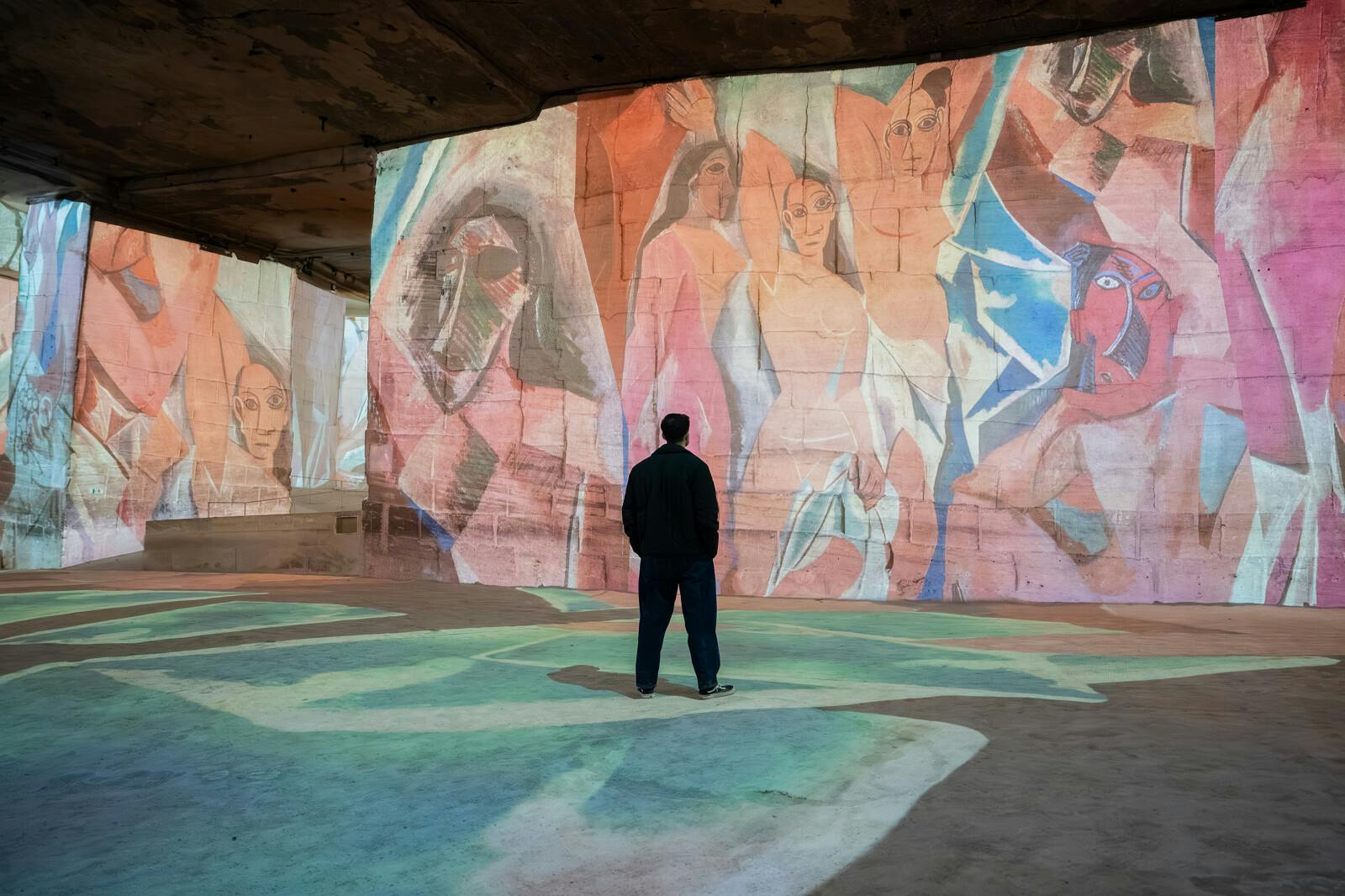
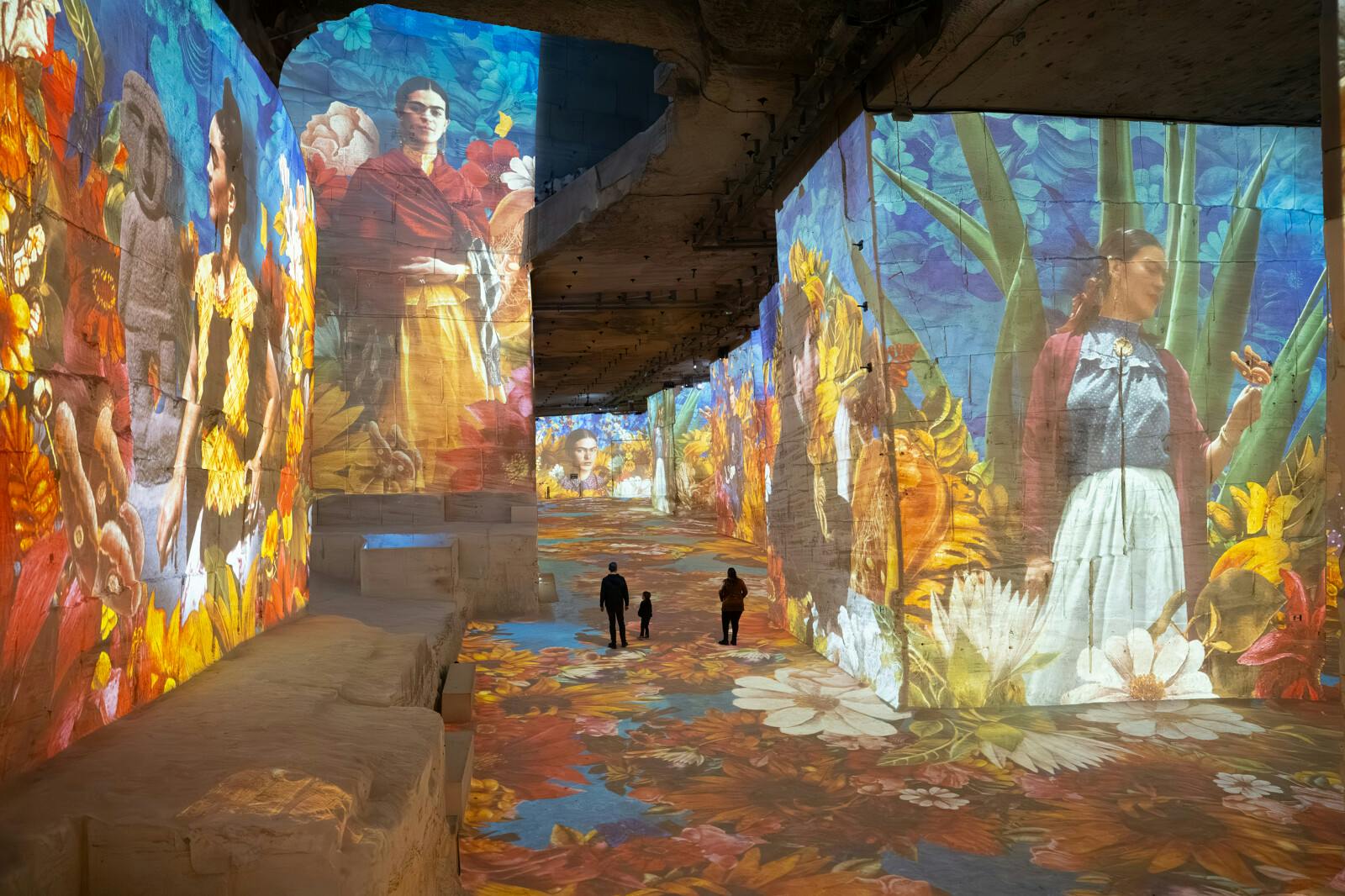
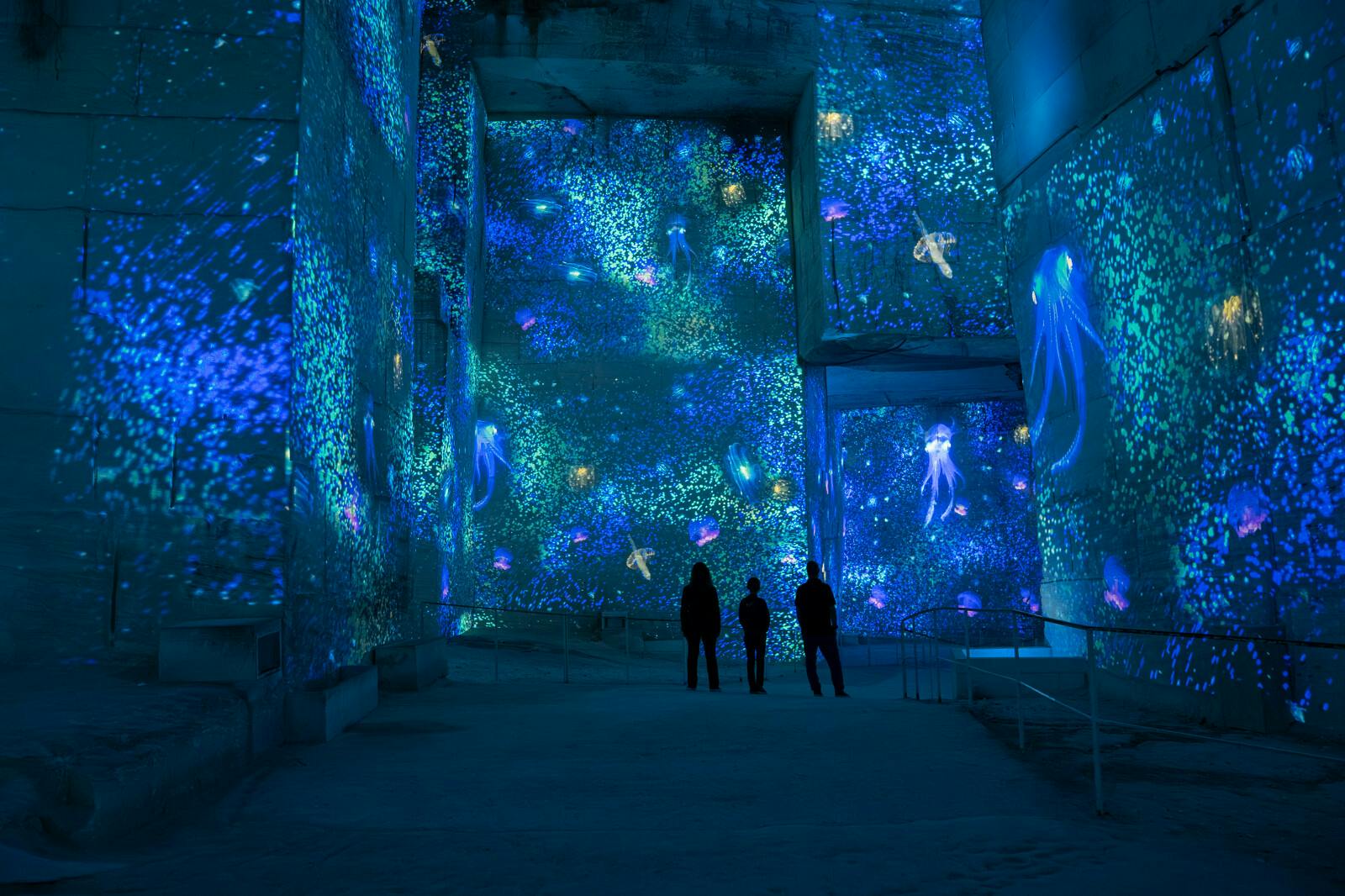
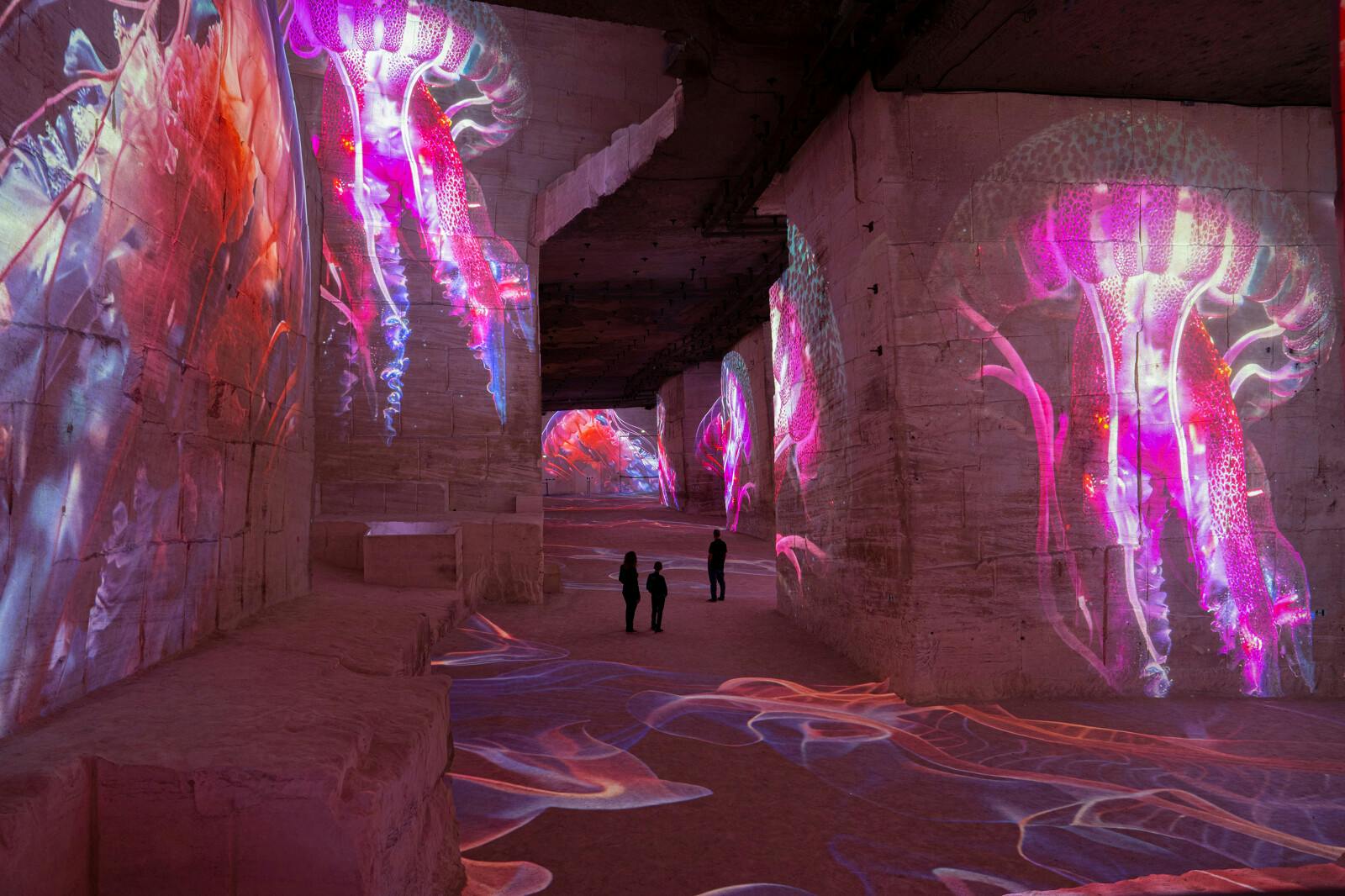
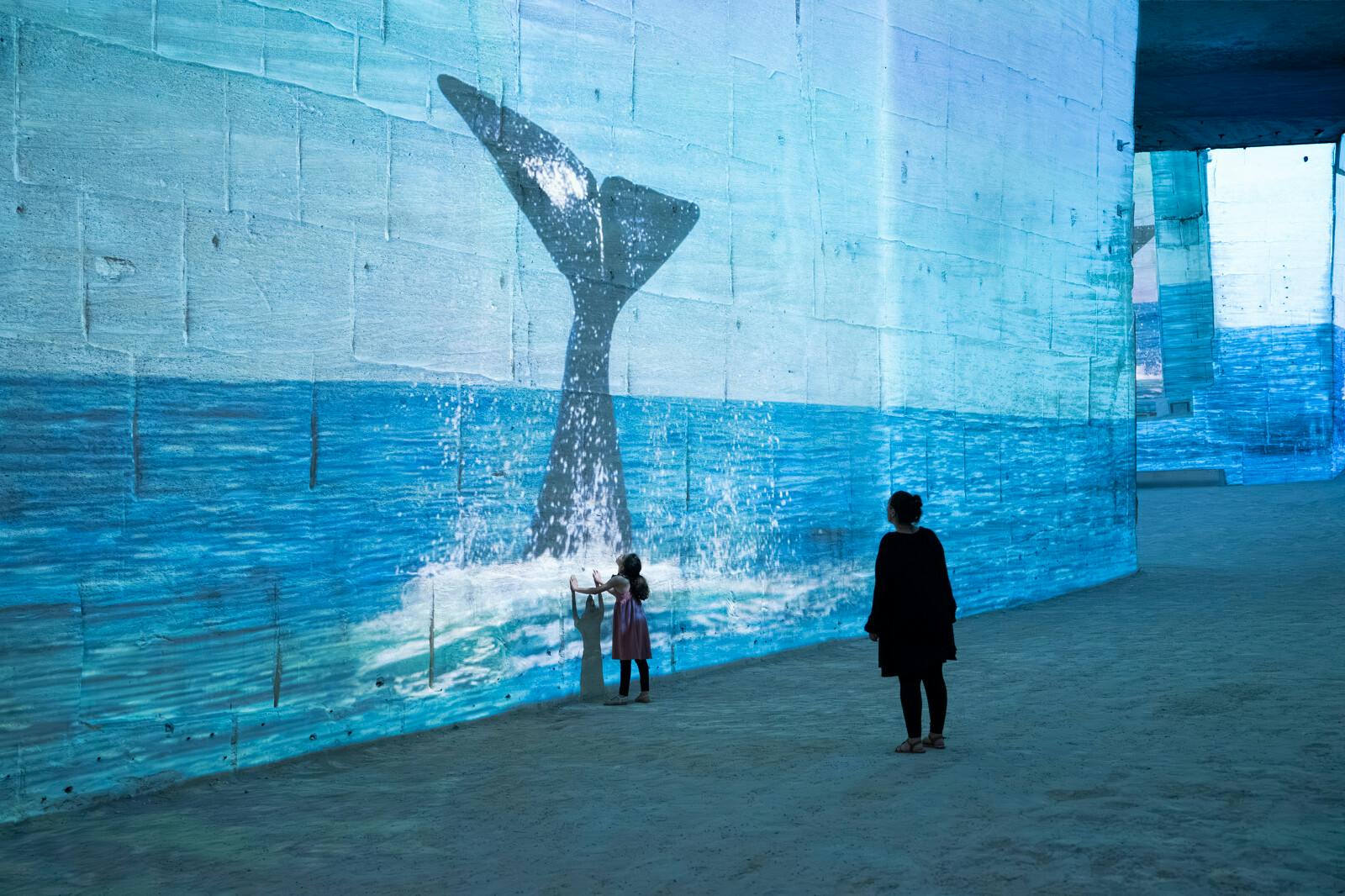
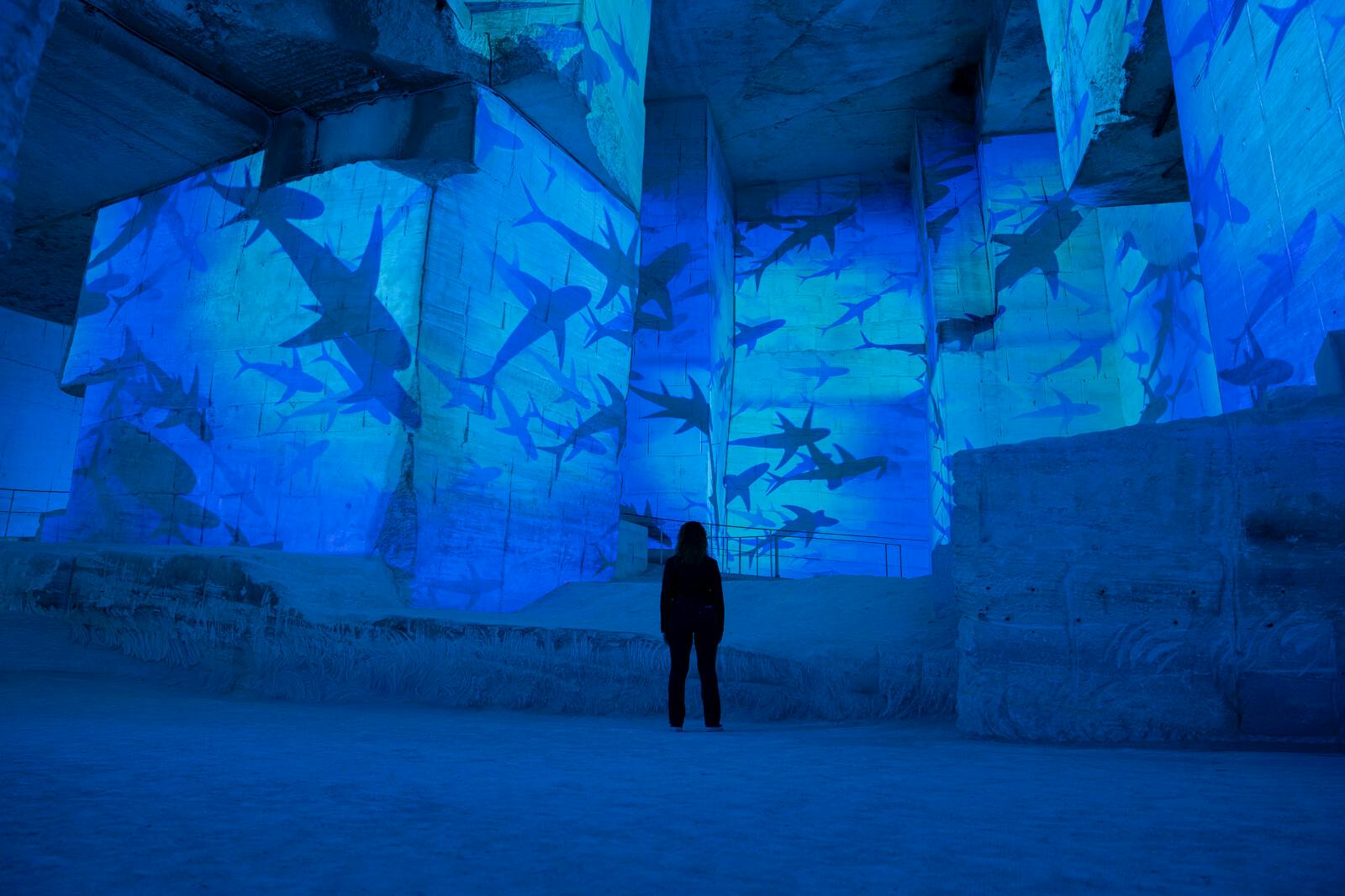
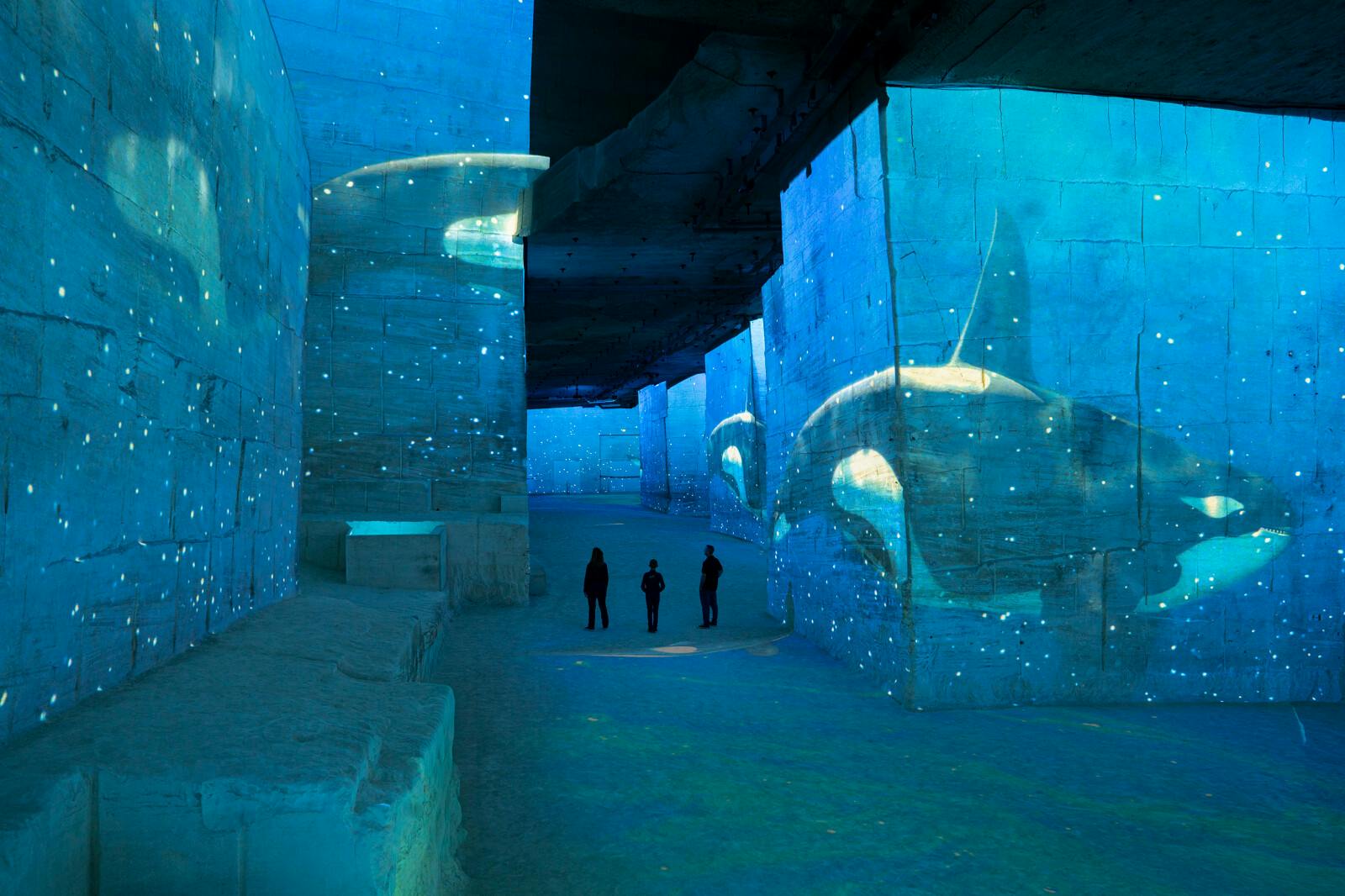
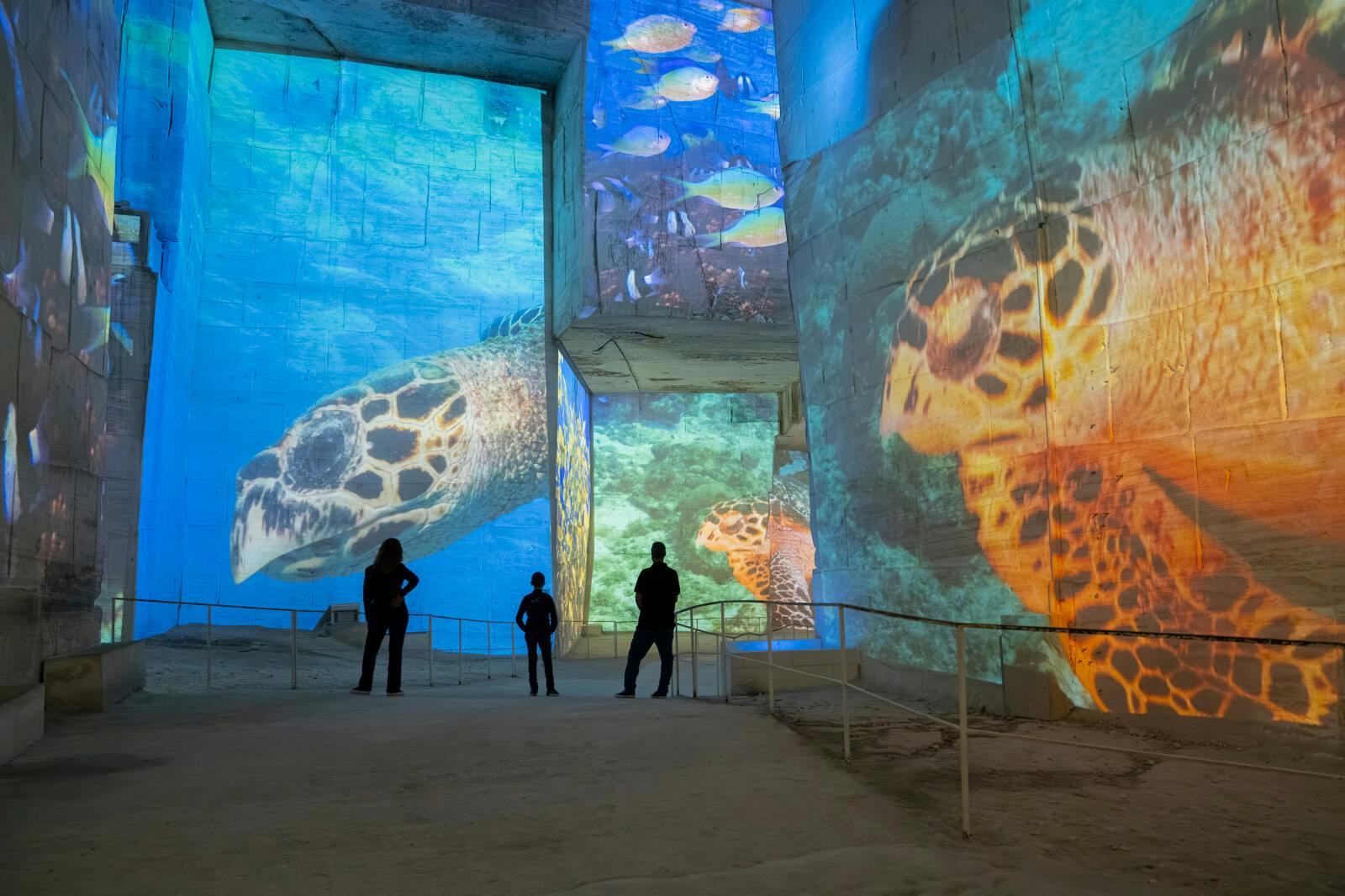
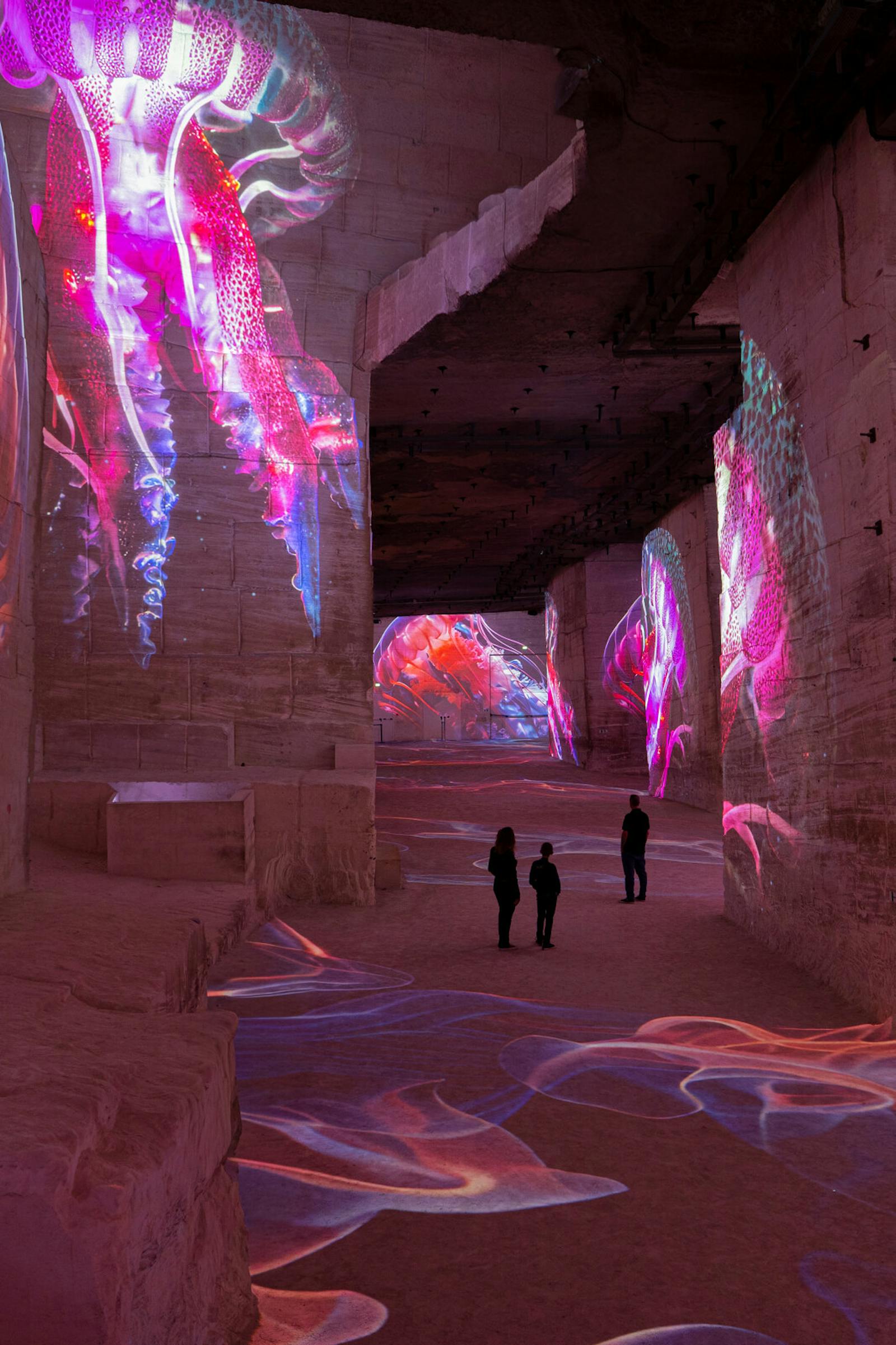
Dante Hall is the heart of the experience, descending 60 meters underground with natural columns seven to nine meters high. These pillars serve as giant screens for projecting large-scale digital artworks. Immersion is total, with light embracing the irregular reliefs of the raw rock once extracted.
The Picasso entrance offers a monumental space set against the mountain, preparing visitors for the discovery of the interior rooms. The small projection room shows excerpts from Jean Cocteau's film, recalling the site's cinematic history. Each zone is designed to maximize the visual impact of projections on natural surfaces. The atmosphere is particularly theatrical and immersive from the moment you arrive.
The projected content varies according to annual exhibitions, always offering a different artistic theme to discover. It is crucial to check the current program before your visit, as themes change regularly. This variability guarantees a renewed experience for loyal visitors to the site in Les Baux-de-Provence.
Practical tips for your visit
The quarries maintain a cool and stable temperature year-round, unlike the stifling heat of the Alpilles above ground. Bring a light jacket even in summer to stay comfortable during the hour-long visit. The floor consists of natural rock, which can be uneven and sometimes slippery.
Wear closed-toe, comfortable shoes to avoid any risk of falling on uneven stones. Flat sandals or heels are not recommended to ensure optimal safety in the galleries. If you are visiting with young children, a robust all-terrain stroller is recommended for the gravel path.
The free parking located nearby fills up quickly in July and August, often by 10 am. Plan to arrive before 9:30 am to guarantee a spot close to the entrance and avoid long walks. Combining the visit with the Château des Baux allows you to optimize your day in this popular tourist area.