News
Space Center Houston: Reservations Required at Least 48 Hours in Advance for Refunds
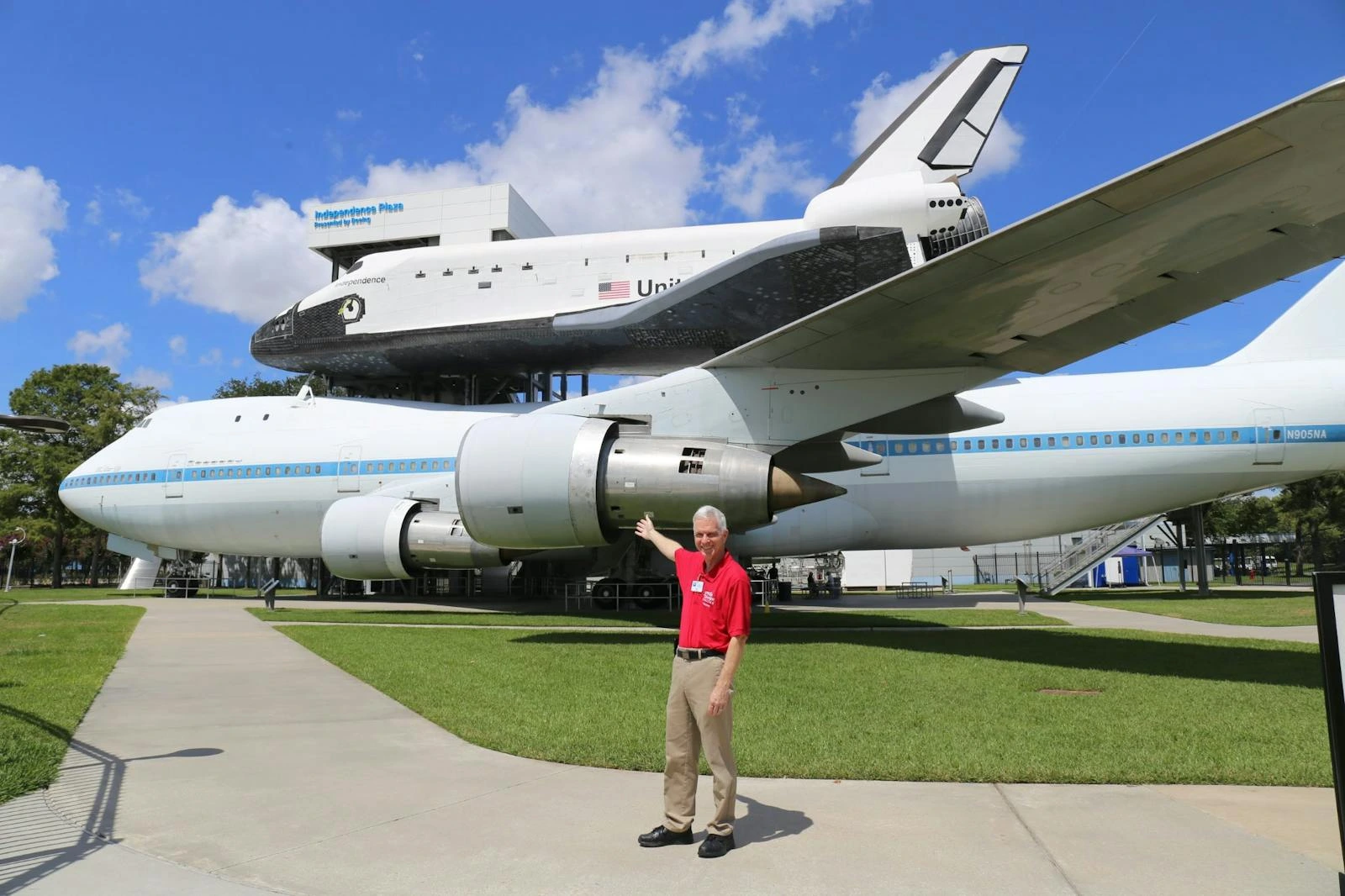
NASA released a digital model of dark matter, exposing the hidden architecture of the cosmos. Concurrently, Space Center Houston, its official visitor hub, and the labs at the Johnson Space Center are actively engaged in preparing astronauts and the public for the difficulties of exploring deep space.
Mapping an Invisible Universe Revealed by Computer Simulation
On October 25, 2026, NASA’s APOD service published an astronomical image showcasing a compelling visual reconstruction generated via a detailed computer simulation. Attributed to Ralf Kaehler and Tom Abel, who are connected to KIPAC, SLAC, and the American Museum of Natural History (AMNH), this artwork was initially produced for the space exhibition Dark Universe held at the Hayden Planetarium. The computational model depicts the expansion of extensive dark matter filaments, rendered in black, weaving through the cosmos like complex spiderwebs. Inside this dark network, observable baryonic matter, responsible for forming stars, planets, and familiar cosmic structures, gathers into scarce, dense knots tinted orange. This calculated and theoretical arrangement provides a statistical match to actual astronomical observations performed on extensive galaxy samples.
So far, dark matter stands as the primary scientific hypothesis accounting for numerous major gravitational anomalies observed throughout the cosmos. Astronomers leverage the attractive force generated by this invisible material to explain why galaxies spin faster than expected and why they travel at high speeds inside clusters. Additionally, the mass of this hidden element explains the significant deflection of light via gravitational lensing, which also dictates the broad distribution of visible matter. Although its precise nature remains mysterious and elusive, dark matter is no longer considered the most astonishing gravitational feature in our universe. That distinction now belongs to dark energy, a more evenly distributed repulsive gravitational force that is presently causing the accelerated expansion of the whole cosmos.
From Cosmic Theory to Practical Immersion in Houston
Understanding core principles of space and matter is central to human exploration and science. To connect people with this knowledge and spaceflight history, the official visitor facility Space Center Houston provides total immersion in space programs' past, present, and future. Situated in Texas, this 183,000-square-foot complex acts as the public gateway to NASA's Johnson Space Center, granting direct entry to advanced technologies and educational programming for every generation. There, guests examine links between basic research on cosmic mysteries and human-rated flight systems designed for distant space missions.
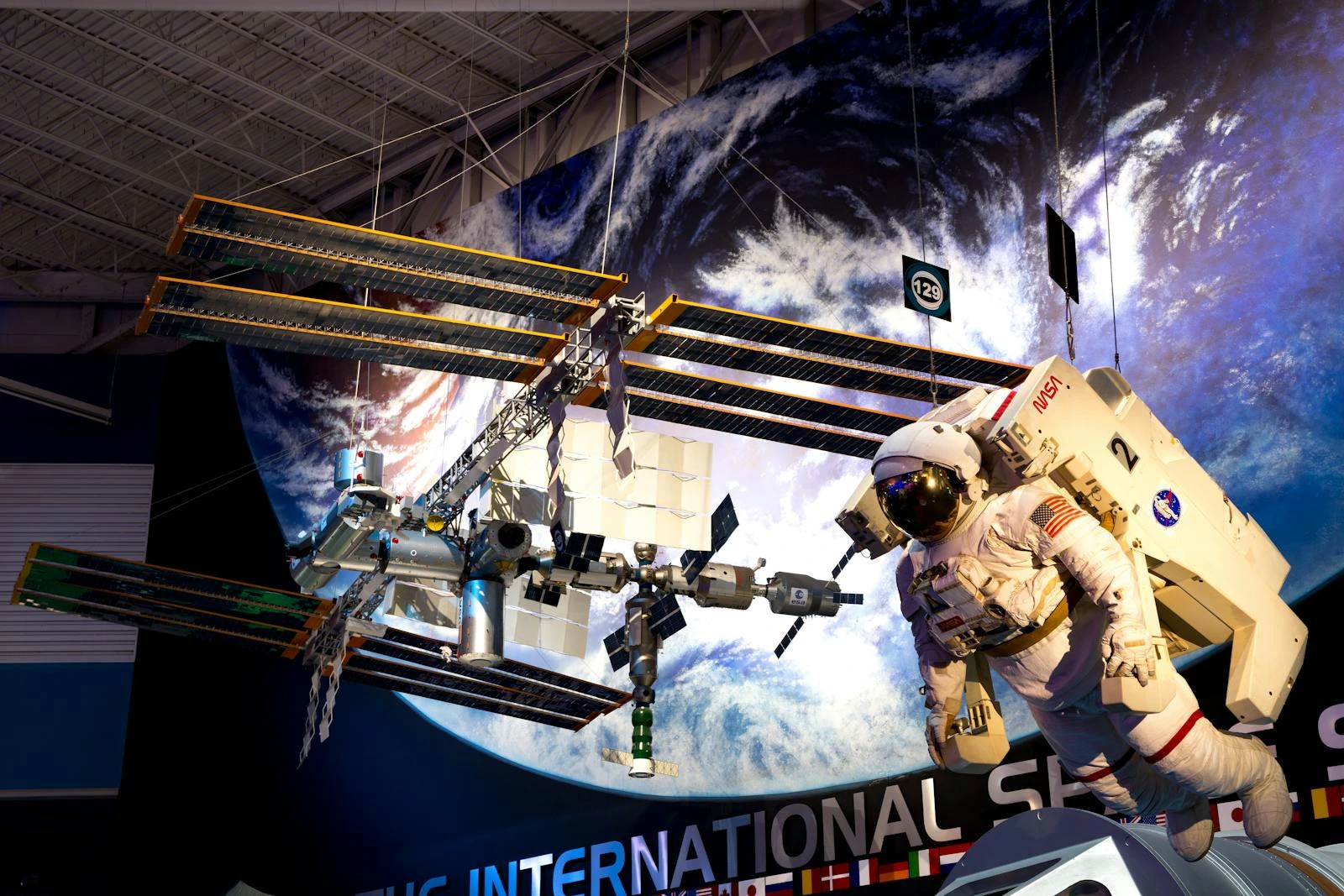
Within Space Center Houston, numerous immersive exhibits replicate the distinct environments of orbital operations. Virtual reality simulators lead visitors on an extravehicular activity beyond the International Space Station, providing a chance to view planet Earth while in low Earth orbit. Concurrently, motion simulators utilizing hydraulic mechanisms and visual displays faithfully mimic the bodily sensations of spaceflight. Priced at an extra cost between $8 and $10 per individual, contingent on availability, these experiences are excluded from standard entry. Nevertheless, they enhance the learning process by imparting a physical understanding of the technical and gravitational challenges faced by space explorers.
Access Requirements and Visitor Guidelines for Touring the Center
Space Center Houston controls visitor flow using a timed-entry ticketing system to limit group sizes. Buying general admission passes online offers discounts relative to on-site ticket booths: adult entry for individuals aged 12 and up costs between $29.95 and $39.95 online, while on-site rates span $34.95 to $44.95. For kids aged 4 to 11, online prices fall between $24.95 and $34.95, contrasting with $29.95 to $39.95 when bought at the entrance. Seniors aged 65 and older pay $27.95 to $37.95 on the web, versus $32.95 to $42.95 when buying at the venue. Young children age 3 and under enter free of charge. To modify a reservation time or request a refund, visitors must email the reservations department at least 48 hours before their scheduled entry. Annual members and Houston CityPASS holders bypass timed reservations, allowing them to enter directly upon arrival.
Regarding logistics, on-site parking costs $10. A service fee is due through mobile phones, scanning QR codes found in the parking areas or at the guest services counter for travelers from abroad. Members enjoy free parking. Electric vehicle charging stations become accessible after the parking fee is paid. Within the complex, two automated teller machines are positioned near the main entrance and at the entry to The Food Lab dining area. For guests bringing bulky items, like oversized suitcases or big duffel bags, a mandatory luggage locker service is offered at $7 per bag. This ensures smooth pedestrian movement and general security.
Strict safety and equipment rules govern all visitors who enter the exhibit galleries. Before entry, every bag receives a security inspection by personnel. Given the substantial walking and an open-air tram journey on the NASA Tram Tour, wearing weather-appropriate, comfortable clothing and athletic walking footwear is recommended. No one may carry guns, stun guns, or pepper spray, or knives featuring blades exceeding four inches or having locking mechanisms. Also prohibited are alcoholic beverages, cooling drinks, non-service household animals, attire or full-face coverings, airborne drones, and bulky camera equipment - including tripods, monopods, gimbals, selfie sticks, action cams, and telephoto lenses longer than six inches.
Inside Operational Operations at Johnson Space Center: Laboratories and Lunar Readiness
Near the public visitor center, NASA’s Lyndon B. Johnson Space Center, located in Houston, has acted as the U.S. hub for human space exploration since its founding on November 1, 1961. Vanessa E. Wyche leads the organization, backed by Stephen A. Koerner, who serves as Deputy Director, and Donna M. Shafer, who serves as Associate Director. The site hosts the space agency’s astronaut corps, the Mission Control Center, and manages key human spaceflight programs, ranging from operations in low Earth orbit to lunar outposts and the Orion spacecraft. Joseph M. Acaba, a former astronaut, directs strategic initiatives concerning STEM partnerships and education. Meanwhile, Victor Herod assists executive management by concentrating on technical and strategic integration. This facility employs more than 12,000 personnel.
Scientific investigations carried out within the center span a multidisciplinary spectrum of expertise, including biology, biotechnology, Earth observation, human medical research, and physical sciences. The Lunar Sample Laboratory stands out as a key benchmark facility, serving as a protected vault for the scientific management, physical safeguarding, and environmental shielding of samples of lunar rock and soil gathered during Apollo lunar surface operations between 1969 and 1972. Other critical facilities directly support crew health and survival, such as the Biosafety Level 2 microbiology laboratory within the Human Health and Performance Directorate, and the Space Food Systems Laboratory, responsible for menu planning, food preservation, and packaging technologies for all NASA missions.
Facilities of substantial magnitude underpin engineering tasks and physical preparation. The Neutral Buoyancy Laboratory contains one of the planet’s biggest indoor pools, permitting concurrent surface and submerged drills to refine procedures, test equipment, and ready astronauts for vital extravehicular activities. Next to this, the Space Vehicle Mockup Facility offers full-scale replicas for training flight crews and ground personnel, aiding engineering assessments for the International Space Station and the Orion program. While cosmic models keep illuminating dark matter and initiatives such as Artemis ready for lunar return and further travel to Mars, Houston’s scientific and educational infrastructure sustains the crucial link between cosmic discovery and human existence in space.
Sources: nasa.gov · spacecenter.org · nasa.gov