News
Royal Palace of Madrid: Changing of the Guard Organized on October 7
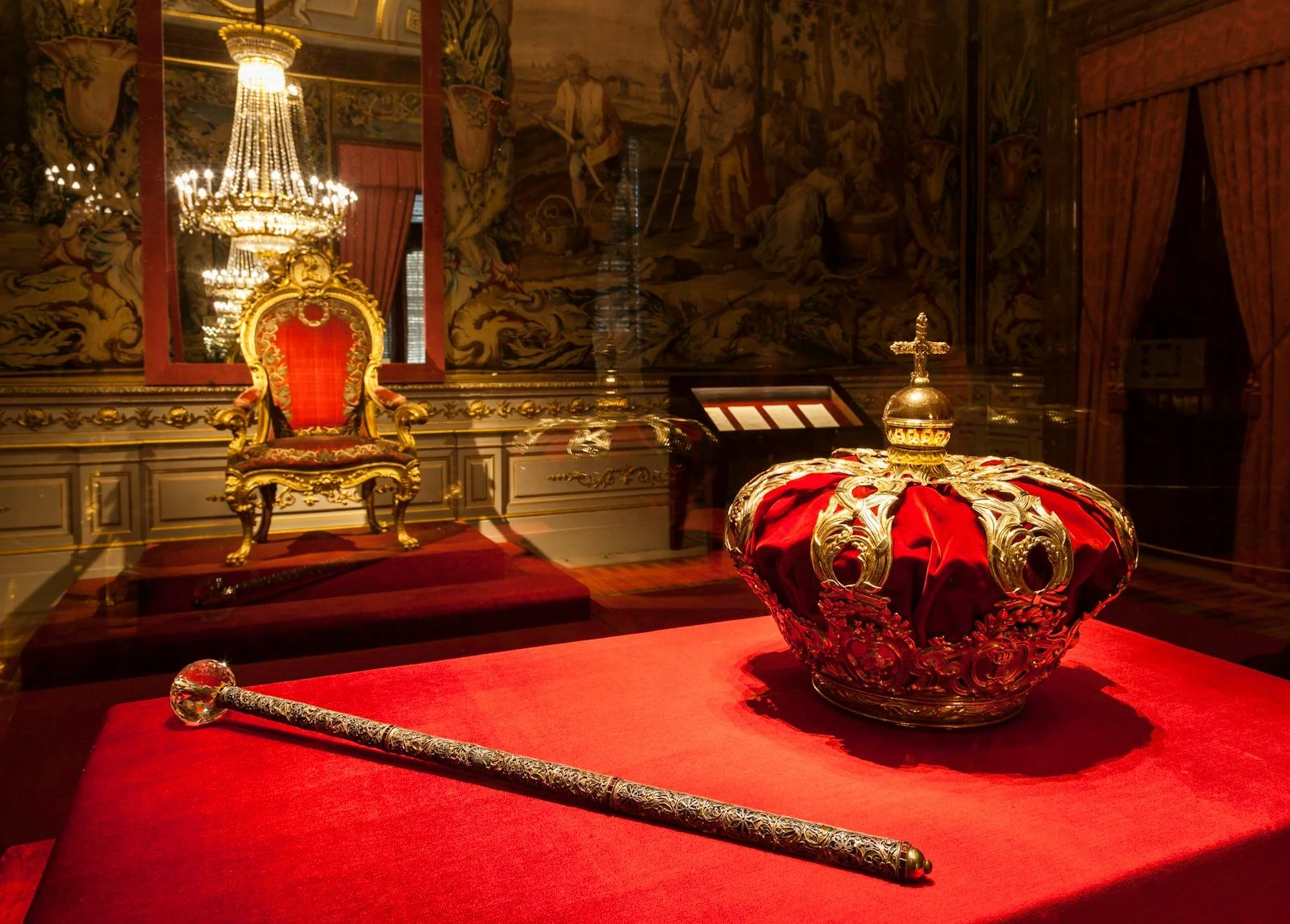
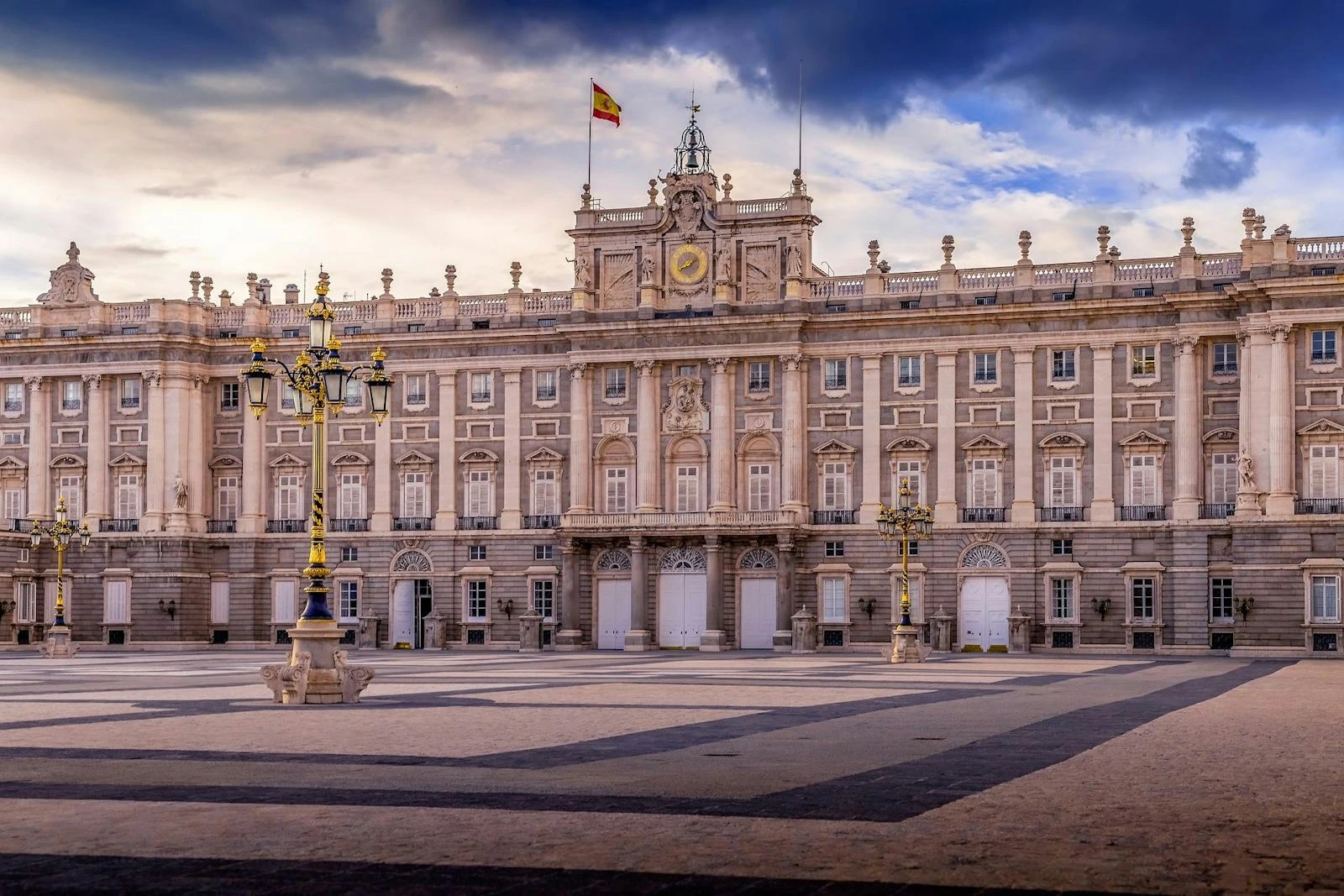
The official residence of the Spanish monarchs open to visitors, the Royal Palace of Madrid upholds its ceremonial functions and strictly regulates public access.
Living Ceremonies and Official State Functions
The Royal Palace of Madrid hosts major official events as well as the changing of the guard ceremony, highlighting its living role in the service of the Spanish monarchy. Managed by Patrimonio Nacional, the monument is regularly used by Their Majesties the King and Queen of Spain for diplomatic audiences and high-level ceremonial occasions.
Unlike most heads of state residences around the world, this iconic landmark remains fully accessible to the public while retaining its status as an active official seat. This continuous coexistence of institutional duties, ceremonies, and tourist crowds requires specific schedule adjustments, as the monument may alter its opening hours depending on protocol requirements.
Drawing nearly two million visitors each year, the monumental complex stands as a cornerstone of life in Madrid. The dozens of activities arranged along the tour routes blend with the staging of solemn acts, illustrating the continuity of a seat of power that has never ceased operating.
A Colossal Fortress Born from the Ashes of the Old Alcázar
Spanning an area of more than 135,000 square meters with an impressive 3,418 rooms, the monument is the largest palace in Western Europe and ranks among the largest in the world. Its architectural journey began after the tragic Christmas Eve fire of 1734, which destroyed the medieval Alcázar standing on this strategic site.
This original Alcázar had been converted into a royal palace when Philip II chose to make it the official residence of the kings of Spain in 1561. Following its complete destruction in the 18th-century blaze, court legend unfounded blamed the disaster on courtiers close to Philip V, who were rumored to desire a replica worthy of Versailles.
To oversee this colossal undertaking, Philip V called upon the Italian master Filippo Juvarra. Juvarra died before seeing his design realized, leaving his disciple Giambattista Sacchetti to adapt the project and conceive a fireproof fortress vaulted exclusively in stone with no wooden framework.
The first stone was solemnly laid in 1738, and the main structural shell was completed in 1751. Sacchetti closely supervised the subsequent exterior work and decorative sculptural program until 1759, before Francisco Sabatini, the royal architect of Charles III, made final refinements allowing the sovereign to take up residence in 1764.
From Tiepolo's Frescoes to the Splendors of the Royal Armoury
The interior of the palace reflects the evolving tastes of the monarchs who lived there, beginning with Charles III, who introduced an Italian-inspired artistic grandeur. Celebrated masters were summoned to the court, including the Venetian Giambattista Tiepolo and the German painter Anton Raphael Mengs, whose fresco cycles continue to adorn the ceilings of the state rooms.
These Enlightenment monarchs resided on site for only eight weeks each year, divided between December, Holy Week, and July, preferring to spend the rest of the year at their other Crown estates in El Escorial, Aranjuez, and La Granja. Nevertheless, Charles III's apartments retain a cohesive decorative scheme directed by Sabatini.
Among the must-see highlights are the Salón del Trono and the Salón de Gasparini, showcasing an exuberant Italian Rococo style. Charles IV later introduced Neoclassical decor and French furnishings, Ferdinand VII acquired remarkable bronze and crystal chandeliers, and Alfonso XII oversaw the final major historic renovation campaign in 1879.
Along the eastern facade, the apartments of Charles IV and Queen Maria Luisa continued to house Spanish sovereigns until 1931. Nearby, the Real Armería features a military collection of European renown, moved to its dedicated pavilion in 1891 after having been originally established near the Alcázar by Philip II.
The route of notable spaces also features the Escalera Principal, the Salón de Columnas, the Comedor de gala, the Capilla Real, the Salón de Alabarderos, and the Real Cocina, completing one of the most comprehensive palace visits in Europe.
The Green Haven of Campo del Moro and Its Landscaping Legacy
Adjoining the architectural complex, the gardens of Campo del Moro form a major historic park whose beginnings trace back to the layouts initiated by Philip II when the court was established in Madrid. Left neglected during the Sexenio Democrático, the area was revitalized in the late 19th century under Queen Regent Maria Christina of Austria.
She commissioned landscape designer Ramón Oliva to direct a complete redesign featuring curved pathways, a structure that remains recognizable today despite minor changes after the Spanish Civil War. Back during the Napoleonic era, Joseph Bonaparte took a personal interest in the grounds, ordering Juan de Villanueva to connect the site to the Casa de Campo via a tunnel and bridge.
These connections were later completed by Isidro González Velázquez during the reign of Ferdinand VII. Today, the Campo del Moro park offers a shaded retreat with a terrace, offering completely free admission for visitors, although certain areas remain temporarily restricted to the public.
Visiting Conditions, Ticketing, and Strict Security Guidelines
To plan a visit to the royal palace on Plaza de Oriente, visitors enter the complex through the gates of the Almudena esplanade at the corner of Calle Bailén, a primary access point shared with tour groups. The site is accessible via Metro lines 2 and 5 at Ópera station, through the Príncipe Pío train station, and at BiciMad station No. 36.
From Monday to Saturday, the monument welcomes visitors from 10:00 to 18:00 between October and March (last admission at 17:00), extending its hours from 10:00 to 19:00 from April to September (last admission at 18:00). On Sundays, opening hours are 10:00 to 16:00, with ticket sales and admission closing at 15:00.
Free admission slots are scheduled from Monday to Thursday between 16:00 and 18:00 from October to March (last entry at 17:00) and between 17:00 and 19:00 from April to September (last entry at 18:00). During these free entry periods, however, the Real Cocina remains closed to visitors, as overall capacity limits are maintained to ensure heritage preservation.
Regarding admission prices, basic general admission is priced at 18 €, reduced tickets cost 9 €, and agency rates stand at 16 €, alongside optional guided tours for 8 € or audioguides for 5 €. Patrimonio Nacional strongly recommends booking online due to limited visitor capacity and enforces a strict security policy: large backpacks, suitcases, and bulky luggage are discouraged due to ongoing work, and 200 € and 500 € banknotes are not accepted at ticket counters.
Finally, non-flash photography for strictly personal use is permitted inside the rooms, with the exception of areas where restrictions are clearly posted, while tripods and selfie sticks remain strictly prohibited to preserve the tranquility of the premises and respect staff privacy.
Sources: news.google.com · patrimonionacional.es