News
ZooParc de Beauval: Exceptional Closure to the Public on October 10 and 11, 2026
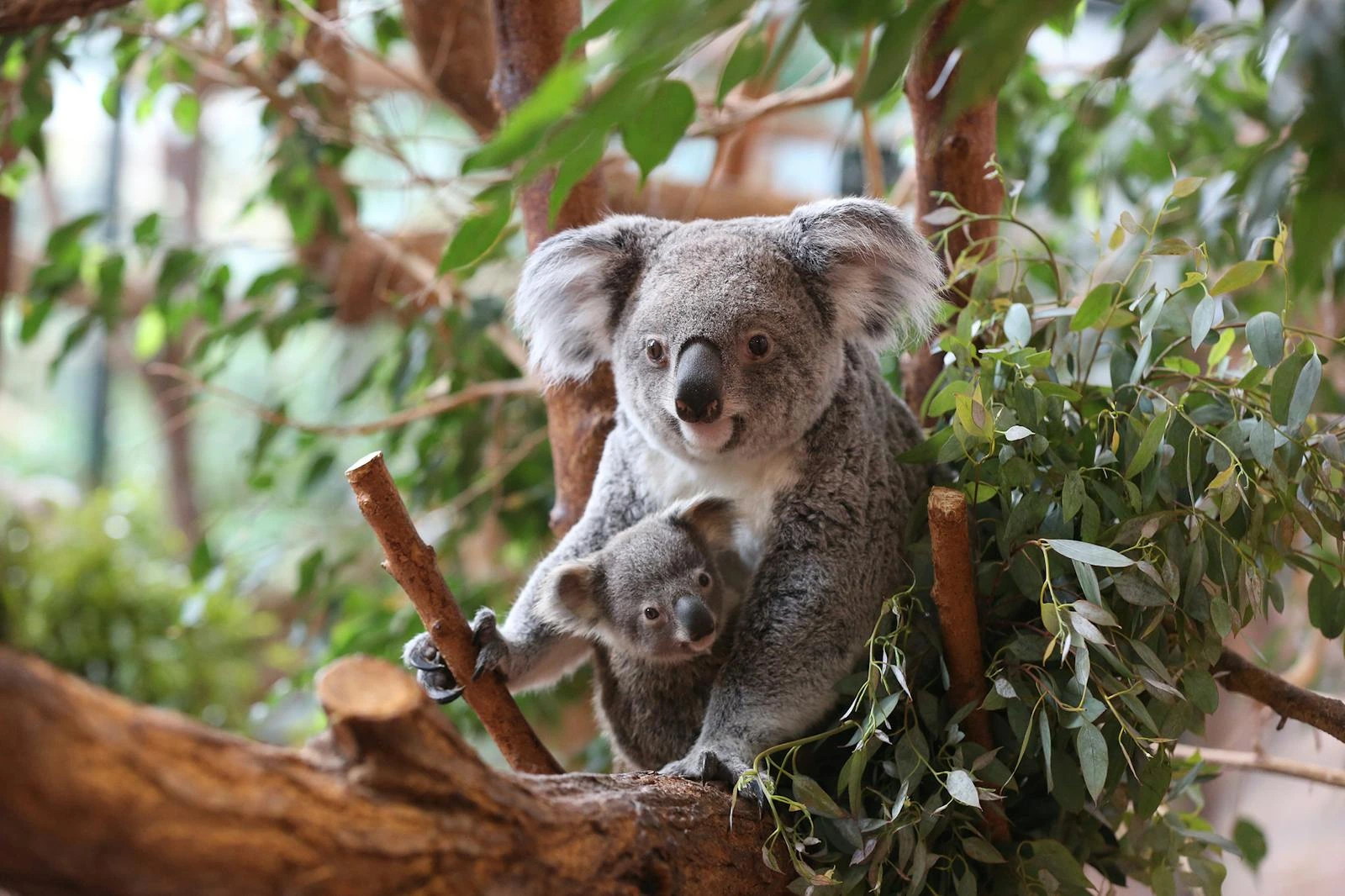
On the occasion of World Gorilla Day on September 24, an overview of the conservation efforts carried out in the field by Beauval Nature, from world firsts in the wild to the social dynamics of the eleven gorillas hosted at ZooParc de Beauval.
An international celebration to raise awareness of great ape vulnerability
Every September 24, World Gorilla Day invites the general public to take a close look at Africa's great apes and the extreme fragility of their natural habitats. This symbolic date aims to intensify awareness around the two species recorded on the continent, the eastern gorilla and the western gorilla, each subdivided into two distinct subspecies. Among them is the western lowland gorilla, an iconic subspecies that receives ongoing attention within European and global zoological programs.
At ZooParc de Beauval, this event highlights the ecological status of these primates as well as the multiple threats facing their survival in the heart of equatorial forests. Wild populations face direct pressures that weaken their numbers, justifying coordinated international mobilization to prevent the extinction of these fascinating animals.
Ecological role and unique behaviors in the heart of equatorial forests
Gorillas live primarily in the tropical rainforests of equatorial Africa, inhabiting both lowland areas and mountainous terrain. Their geographic distribution varies significantly between species: western gorillas mainly inhabit the forests of Gabon, Cameroon, and the Republic of the Congo, while eastern gorillas are found in the Democratic Republic of the Congo, Rwanda, and Uganda.
Their diet is essentially plant-based, although its composition depends directly on the characteristics of the forest environment. For the western lowland gorilla, fruit makes up a predominant share of daily meals, whereas mountain gorillas feed primarily on leaves, stems, and young shoots. By dispersing seeds from the fruits they consume, gorillas play a leading role in natural regeneration and the renewal of the canopy.
Despite their massive build, gorillas can climb trees with agility, especially younger individuals whose lighter weight makes climbing easier. For their resting periods, they build nests made of woven branches and leaves, set either on the ground or up in trees. Furthermore, tool use has been documented in certain individuals, such as using a stick to test the depth of a stream before wading into it.
Socially, the classic structure centers around an adult male whose back hair turns gray over the years, earning him the common nickname of silverback. This group leader generally watches over several females and their offspring in what is described as a harem, but nature also hosts groups made up exclusively of bachelor males. Communication relies on a wide array of vocalizations, facial expressions, and coded body postures, not to mention the characteristic chest-beating that allows males in particular to assert their dominance and display strength to one another from a distance.
A critical threat level intensified by a very slow reproductive cycle
The assessment made by the international scientific community remains alarming: both gorilla species, eastern and western alike, are classified as Critically Endangered on the IUCN Red List. At the subspecies level, an encouraging nuance involves the mountain gorilla, downlisted in 2018 to Endangered thanks to the tangible outcomes of conservation initiatives, even though this positive development does not guarantee its long-term future.
The factors driving their decline are varied and directly linked to human activities. Deforestation as well as the rapid fragmentation of forest tracts, caused by agricultural expansion, logging, and mining activities, deprive groups of their food resources and restrict their movement corridors. In addition to this environmental degradation, the scourge of poaching and illegal wildlife trade is coupled with devastating health crises. Outbreaks of the Ebola virus have notably caused dramatic losses among certain western gorilla populations.
This highly vulnerable status is compounded by an extremely slow reproductive biology. Females reach sexual maturity late and give birth to only one infant after a gestation period of around eight and a half months. The mother raises and cares for her young for several years, thereby spacing births by about four years. This slow reproduction rate prevents any rapid recovery of depleted numbers, making a long-term conservation commitment absolutely essential.
Beauval Nature's commitment: camera trap monitoring and a world first
In response to these perils, the Beauval Nature association carries out major field programs. Since March 2021, it has worked in close partnership with the HELP Congo association in the heart of Conkouati-Douli National Park, located in the Republic of the Congo. This protected area harbors rich, threatened biodiversity, home to the western lowland gorilla.
Within this Congolese reserve, camera traps are deployed systematically to ensure regular monitoring of wildlife and deepen scientific knowledge of the species. Alongside these wildlife surveys, specialists carry out targeted research studies and organize environmental education and awareness campaigns for local communities.
ZooParc de Beauval and Beauval Nature have also maintained a long-standing partnership with the Aspinall Foundation for several years. This joint collaboration bore spectacular fruit in 2019 with the reintroduction into the wild, in Gabon, of two females born at Beauval: Mayombe and Kuimba.
The story took on a historic dimension during the night of June 13 to 14, 2021, when the female Mayombe gave birth to a baby female named Taali, meaning 'hope' in the Bateke language. Born to two parents born in zoological parks and subsequently returned to the wild, Taali represents an absolute world first and a major scientific milestone for the conservation of the species. Careful monitoring of Mayombe, Djongo, and their offspring continues to be carried out by the teams.
A colony of eleven gorillas across two social groups at the ZooParc
On site at ZooParc de Beauval, visitors can observe a colony of eleven gorillas organized thoughtfully into two separate social groups, mirroring the natural behavioral patterns seen in the wild. On one side lives a breeding group of five individuals, led by the dominant male Euro, accompanied by four females named Kabinda, Sheila, Sawa, and Anandi.
On the other side, Bachelor Island hosts an all-male community of six individuals. It is led by the adult male Asato, who shares his space with five of his own sons: Mapenzi, Yamba, Kiwano, M'Baku, and Kovanga. All five were born at the ZooParc between 2010 and 2019, including young M'Baku born in 2018.
Life for Asato and his sons on Bachelor Island: anecdotes and sponsorship
Asato's daily life on his dedicated island has inspired real affection from the public and animal care teams alike. Keepers note that to spot him during a visit, one simply needs to look toward the building's facade or near the cave facing Pelican Island, two spots he particularly likes. Known to be quite fond of treats, Asato shows a strong liking for tomatoes as well as cooked sweet potatoes.
Since moving to Bachelor Island, observers find him more relaxed, free from the constant supervision required by a large harem. Yet this big-hearted father remains especially protective of his sons, watching closely over the youngest, M'Baku and Kovanga, and stepping in quickly during scuffles to defend the most vulnerable. His sons often seek his company, even as relationships shift as they mature: Kiwano, the most independent of the siblings, regularly engages in displays of strength that Asato only moderately appreciates.
To support the research and conservation initiatives led by Beauval Nature, it is possible to sponsor Asato starting from 20 euros for a one-year period. This initiative offers a chance to build a special connection with this individual while contributing to the funding of field work vital to gorilla survival.
Everyday actions and coltan recycling: making an impact on an individual scale
Gorilla conservation does not depend solely on scientific fieldwork in Africa; it also relies on tangible everyday habits. The footprint of mobile technology is one of the major concerns: mobile phones contain coltan, an ore whose extraction actively drives the destruction of equatorial forests. Recycling old electronic devices helps reuse critical components and curb the extraction of new raw materials.
ZooParc de Beauval provides a collection point dedicated to discarded mobile phones and tablets, situated at the park's south entrance before the ticket gates. Since this initiative was launched in 2011, more than 14,000 mobile phones and tablets have been recycled thanks to direct contributions from visitors.
In daily life, anyone can champion the cause of great apes by choosing responsible shopping habits, such as systematically selecting wood or paper goods certified with the FSC label, and by avoiding the premature replacement of electronic devices. Financial support through donations to Beauval Nature, sponsoring Asato, or simply sharing well-researched information are all powerful ways to help secure a future for gorillas.
Sources: actus.zoobeauval.com · zoobeauval.com